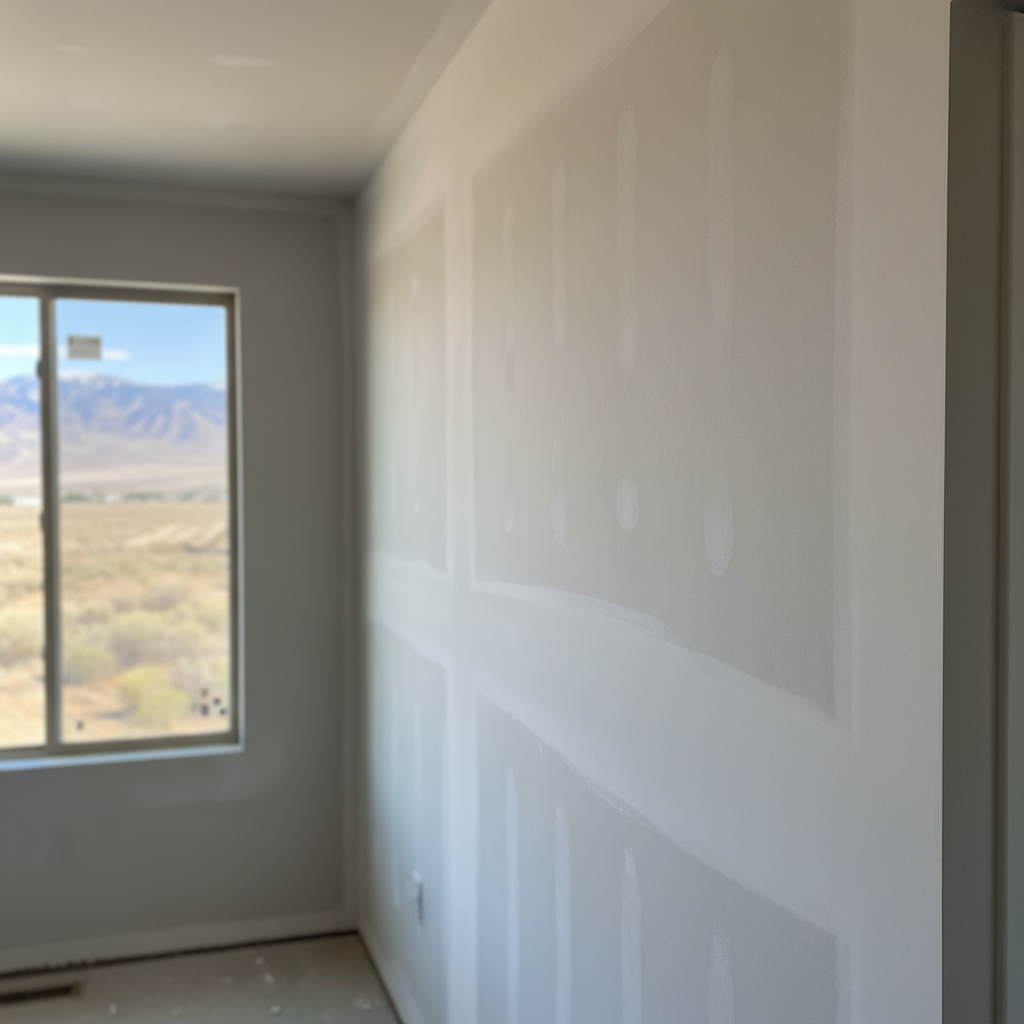
Alright, let us talk about drywall. Specifically, Drywall Taping and Mudding. It is the part of a drywall job that really makes or breaks the whole thing. It turns those flat sheets into smooth, paint-ready walls. Over the years, Valley Drywall has worked on homes all over West Valley City, from new builds near Centennial Park to remodels in the Decker Lake area. Valley Drywall has heard a lot of the same questions from homeowners in West Valley City. So, Valley Drywall figured we would put together some honest answers for you.
What is the difference between Drywall Tape and Drywall Mud, and why do I need both?
Think of Drywall Tape and Drywall Mud as a team. You cannot really have one without the other for a proper finish. The Drywall Mud, or joint compound, is that gypsum-based paste Valley Drywall uses to fill gaps, cover screws, and smooth everything out. It is basically the glue that holds it all together and creates a seamless surface.
Now, the Drywall Tape, that is your reinforcement. Valley Drywall applies it over the seams where two drywall sheets meet, embedding it in that first layer of mud. Its job is to prevent cracks from forming along those joints. Without Drywall Tape, those seams would crack open almost immediately, especially with our temperature swings here in Utah.
There are a few types of Drywall Tape. Paper tape is generally the standard for flat seams and inside corners because it does not stretch. This helps prevent long-term cracking. Mesh tape, on the other hand, is self-adhesive and easier to apply. This makes it popular for repairs or when you are working with cement board, but it is not ideal for inside corners. You would not use mesh tape for inside corners because it lacks that factory crease you need for a sharp, straight angle. Valley Drywall uses the correct Drywall Tape for all Drywall Taping and Mudding projects in West Valley City, UT.
How many coats of Drywall Mud do you really need?
This is an important question, and you will hear different answers. But here is the deal: for most visible interior walls in West Valley City, you are looking at a minimum of three coats of Drywall Mud. Some folks even go for a light fourth coat if they are really chasing perfection for their West Valley City home.
- First Coat: This is your taping coat. Valley Drywall applies a layer of mud, embeds the tape into it, and covers all the screw heads. This is the foundation for your Drywall Taping and Mudding project.
- Second Coat: Once that first coat is dry, Valley Drywall applies a wider layer. This coat builds coverage, smooths out any ridges from the first coat, and starts to feather out the edges.
- Third Coat: This is your finish coat. It is applied even wider and thinner than the second. This coat is designed to make sure there is a seamless, smooth surface. Valley Drywall makes sure there are no visible bumps or lines.
Sometimes, if you want a truly flawless finish for your West Valley City home, especially if you are going for a high-gloss paint, Valley Drywall might even add a skim coat over the three base layers. That is a very thin, final application to smooth out any tiny imperfections. Valley Drywall provides these important Drywall Taping and Mudding services to the West Valley City community.
What are the different types of Drywall Mud and when should I use them?
It is not just one-size-fits-all when it comes to Drywall Mud. You have options, and picking the right one can make a big difference for your Drywall Taping and Mudding project in West Valley City:
- All-Purpose Joint Compound: This is your workhorse. It is pre-mixed, so it is ready to go right out of the bucket. You can use it for bedding tape, filling, and finishing. It is versatile, but it can shrink a bit as it dries, and it takes a while to dry.
- Lightweight All-Purpose Compound: This is similar to regular all-purpose but lighter and easier to sand. It is great for finishing coats.
- Topping Compound: This stuff is specifically designed for the final coats. It goes on super smooth, has minimal shrinkage, and sands like a dream. You would not use it for embedding tape, though, because it is not strong enough.
- Setting-Type Joint Compound (Hot Mud): This comes as a powder you mix with water. The big advantage? It hardens through a chemical reaction, not just evaporation, so it dries fast. This can be anywhere from 5 to 90 minutes, depending on the type. It is awesome for deep fills, repairs, or when you need to get multiple coats done in a single day. It is also less prone to shrinkage. But you have to work fast once it is mixed!
- Taping Compound: This is formulated for embedding tape and has a strong bond. It is not fun to sand, so you would not use it for your finish coats.
For Valley Drywall, we often use a combination of these Drywall Mud types for our Drywall Taping and Mudding projects in West Valley City. Valley Drywall uses Hot Mud for the first coat to embed the tape and get things moving. Then Valley Drywall switches to a pre-mixed lightweight compound for the finishing coats because it sands so easily for that smooth finish. Valley Drywall provides expert Drywall Taping and Mudding services in West Valley City, UT.
How long does Drywall Mud take to dry in West Valley City?
Okay, this is where our local climate plays a role in West Valley City. Utah's dry air can speed things up, but you still cannot rush it too much. Generally, pre-mixed or lightweight joint compound can take up to 24 hours per coat to dry. Setting-type compounds, the 'Hot Mud,' can harden in as little as 20 minutes to 45 minutes, but full cure still takes longer.
Here is what affects drying times for Drywall Mud in West Valley City:
- Type of Mud: As Valley Drywall just said, Hot Mud is fastest.
- Thickness of Application: Thicker coats take much longer. Thin, even coats are always better.
- Humidity: Even though West Valley City is generally dry, if it is a humid day or you are working in a bathroom, it will take longer. High humidity slows down evaporation.
- Temperature: Warmer temperatures, between 60-70°F, help it dry faster. Colder rooms slow everything down.
- Ventilation: Good airflow is your friend. Fans and open windows circulate air, helping moisture evaporate.
Do not just go by the clock. The Drywall Mud needs to be consistently light in color, almost white, all the way through before you sand or apply the next coat. If it is still dark or damp-looking, it is not ready. Rushing it leads to cracking and other headaches down the road. Valley Drywall makes sure all Drywall Taping and Mudding coats are properly dry in West Valley City, UT.
What are the different finish levels for drywall?
This is something a lot of homeowners in West Valley City do not even know about, but it is very important. Drywall finishes have industry standards, from Level 0 to Level 5. Higher numbers mean more work, and a smoother, more perfect result.
- Level 0: No finish at all. Just the drywall sheets. You would only see this if the drywall is temporary.
- Level 1: Tape embedded in mud at seams and corners. Tool marks are acceptable. This is for areas that will not be seen, like above a ceiling grid or in a service chase.
- Level 2: One coat of compound over the tape and screw heads covered. It is smooth enough for tile or heavy texture, but not for paint. Think garages or storage areas in West Valley City.
- Level 3: Two coats of compound over tape and screws, sanded smooth. This is good for areas with heavy textures, but you will still see imperfections under flat paint or light textures.
- Level 4: This is the most common finish for homes in West Valley City. It means three coats of compound, sanded smooth. It is good for flat paint or light textures. However, if you are using gloss or semi-gloss paint, or if you have strong lighting, you might still see some joint lines.
- Level 5: This is the top-tier finish. It is a Level 4 finish with an additional skim coat of joint compound over the entire surface. This creates a perfectly smooth, uniform surface. This is essential for high-gloss paints or when you have critical lighting that would highlight every tiny flaw. It is the most time-consuming and expensive, but it gives you the best possible result for your West Valley City home.
Here in West Valley City, especially with that bright Utah sun streaming in, a Level 4 or even a Level 5 finish is often what you need for main living areas to avoid those visible imperfections once the paint goes on. Valley Drywall provides all levels of Drywall Taping and Mudding finishes in West Valley City, UT.
Why do I get cracks in my drywall, even after it has been mudded and taped?
Cracks are a pain, and they are usually a sign of something moving. Here are the common culprits for cracks in drywall in West Valley City:
- Foundation Settling: Our clay soils around here can shift with moisture changes. That can cause your home's foundation to settle. This movement puts stress on your walls, leading to cracks, especially around doors and windows.
- Temperature and Humidity Fluctuations: Materials in your home, including drywall, expand and contract with changes in temperature and humidity. With our hot summers and cold winters in West Valley City, this constant movement can stress seams and cause cracks.
- Poor Installation: If the drywall was not secured properly, or if the Drywall Taping and Mudding was not done right. Maybe not enough coats, or not letting coats dry fully. You are going to see cracks. Improper taping can lead to bubbling or peeling tape, which then cracks.
- Water Damage: Leaks from plumbing, the roof, or windows can weaken drywall. This causes it to swell, then crack.
- Structural Shifts: Sometimes it is just the natural settling and shifting of the house frame over time.
If you are seeing recurring cracks, especially large ones, it is worth getting a professional to look at it. It might be more than just a cosmetic issue. Valley Drywall can inspect your drywall for cracks in West Valley City, UT.
Can I DIY Drywall Taping and Mudding, or should I hire a pro?
Look, Valley Drywall is all for homeowners tackling projects, but Drywall Taping and Mudding is one of those things that looks a lot easier than it is. You can definitely do small repairs yourself, like filling nail holes. Valley Drywall can help with small Drywall Repair needs in West Valley City.
But for whole rooms or larger areas, getting a truly smooth, seamless finish takes a lot of practice, patience, and the right tools. If you do not get the layers right, or if you do not sand properly, every imperfection will show up once you paint. This is especially true with that bright West Valley City sunlight. You will end up with visible seams, bumps, and uneven surfaces. Rushing the drying, using too much compound, or skipping primer are common DIY mistakes that lead to problems. Valley Drywall avoids these issues with our Drywall Taping and Mudding services in West Valley City.
A professional, like us at Valley Drywall, has the experience to apply thin, even coats, feather out the edges perfectly, and minimize dust during sanding. Valley Drywall knows how to handle the nuances of our local climate in West Valley City and make sure your walls look great and last. It is about getting that smooth, paint-ready surface without the learning curve and frustration. Sometimes, trying to DIY a big job like this can actually end up costing you more in time and materials if you have to fix mistakes. Valley Drywall provides expert Drywall Taping and Mudding services to West Valley City, UT.