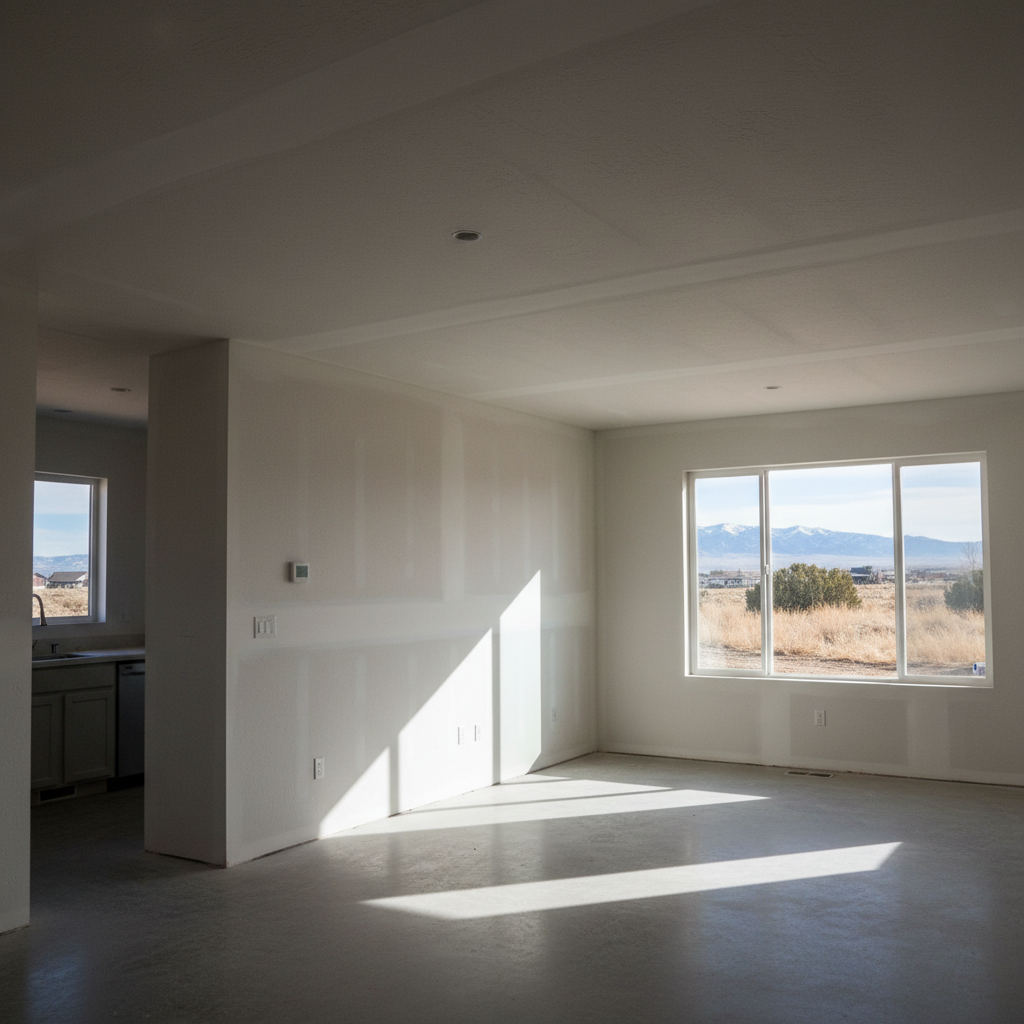
Alright, let's talk drywall costs here in West Valley City. It's one of those things where everyone wants to know, "What's it gonna cost me?" And while I can't give you an exact number without seeing the job, I can definitely break down what goes into the price tag so you're not flying blind.
What Affects Drywall Pricing?
There's no single price for drywall, plain and simple. A lot of factors play into it. Here's what I look at when I'm putting together a quote:
- New Installation vs. Repair: Putting up brand new drywall in an addition or a new build is usually more straightforward than patching a bunch of holes or fixing water damage. Repairs often involve matching textures, dealing with existing framing, and more meticulous work.
- Type of Drywall: Standard 1/2-inch drywall is the most common and cheapest. But sometimes you need specialized stuff. Think 5/8-inch for fire rating between floors or for soundproofing, moisture-resistant (green board or purple board) for bathrooms and kitchens, or even mold-resistant options. These specialty boards cost more per sheet.
- Level of Finish: This is a big one. Are we talking about a garage where a Level 2 finish (taped joints, one coat of mud) is fine, or your living room where you want a Level 4 or 5 (smooth as a baby's bottom, ready for paint)? The higher the finish level, the more time and skill it takes, and the more it costs. Most homes need at least a Level 4.
- Ceiling Height: High ceilings mean more labor. We need taller stilts, scaffolding, or lifts, which slows things down and adds to the safety precautions. It's just harder to hang and finish drywall 10 or 12 feet up compared to a standard 8-foot ceiling.
- Complexity of the Job: Lots of corners? Arches? Niches? Bulkheads? Skylights? Every little architectural detail adds time and complexity. Open, flat walls are the easiest and fastest.
- Demolition and Debris Removal: If we're tearing out old drywall, someone's gotta do it and haul it away. That's an extra cost for labor and disposal fees.
- Location within West Valley City: While West Valley City itself is pretty consistent, if you're way out in a new development near the Oquirrh Mountains with limited access, or in an older, tighter neighborhood where parking is a nightmare, it can sometimes affect logistics and thus, the price.
Typical Drywall Cost Ranges in West Valley City
Okay, let's get down to some numbers. Keep in mind these are averages, and they can fluctuate with material costs and demand. These prices usually include materials, installation, and finishing (taping, mudding, sanding).
- Basic Drywall Installation (Level 2-3 finish, garage/utility room): You're probably looking at $1.50 to $2.50 per square foot. This is for simple, functional spaces.
- Standard Home Drywall (Level 4 finish, living areas, bedrooms): For most residential projects, expect to pay between $2.50 and $4.00 per square foot. This is a good, paint-ready finish.
- High-End or Complex Jobs (Level 5 finish, specialty drywall, intricate designs): This can jump to $4.00 to $6.00+ per square foot. Think custom homes or remodels where perfection is the goal.
- Drywall Repairs: This is harder to give a per-square-foot price because it's so variable. A small hole might be $150-$300 for a patch and blend. Extensive water damage or multiple patches could run anywhere from $500 to several thousand dollars, depending on the scope.
So, for a typical 12x12 foot room (144 sq ft) with 8-foot ceilings (meaning around 480 sq ft of wall and ceiling surface), you might be looking at $1,200 to $1,920 for a standard finish. A whole basement of, say, 1,000 sq ft of floor space (roughly 3,200 sq ft of wall/ceiling) could be $8,000 to $12,800.
What Should Be Included in Your Quote?
When you get a quote from me or any other reputable contractor, here's what you should expect to see clearly laid out:
- Materials: This covers the drywall sheets themselves, screws, tape, joint compound (mud), corner bead, and any specialty products.
- Labor: The cost for hanging, taping, mudding, and sanding. This is usually the biggest part of the bill.
- Finish Level: It should specify what level of finish you're getting (e.g., Level 4).
- Cleanup: What kind of cleanup is included? Most good contractors will remove all drywall debris.
- Prep Work (if applicable): Any necessary steps like protecting floors or furniture.
- Permits (if applicable): For larger jobs or structural changes, permits might be needed. Make sure you know who's responsible for pulling them.
What's usually NOT included: Paint. We're drywall guys, not painters, unless you specifically ask for a separate painting quote.
How to Avoid Overpaying
Nobody wants to get ripped off, especially with something as fundamental as drywall. Here's my advice:
- Get Multiple Quotes: Don't just go with the first guy. I always recommend getting at least three bids. It helps you understand the market rate and compare what's being offered.
- Be Specific About Your Needs: Clearly communicate what you want. If you want a Level 5 finish in your living room but a Level 3 in the laundry room, say so. The more details you provide, the more accurate the quote will be.
- Check References and Reviews: A good contractor will have a track record. Look for reviews online or ask for references. You want someone reliable who does quality work. For us at Elite Drywall Inc, our reputation is everything.
- Ask About the Finish Level: Seriously, this is where a lot of misunderstandings happen. Make sure the quote clearly states the finish level.
- Don't Always Go for the Cheapest: The lowest bid often means corners are being cut, either in materials or labor. Drywall is a long-term investment in your home. You don't want wavy walls or cracking seams a year down the road.
- Get Everything in Writing: A detailed, written contract protects both you and the contractor. It should spell out the scope of work, materials, costs, payment schedule, and timeline.
Drywall isn't the flashiest part of a home, but it's crucial for a smooth, finished look. Do your homework, ask the right questions, and you'll get a fair price for quality work here in West Valley City.